
What Is the Best Lighting for Bridal Portraits? (2026)
Even the most skilled makeup artist and an expensive lehenga cannot compensate for bad lighting on your wedding day. To capture every intricate detail, embroidery thread, and subtle expression, understanding **what is the best lighting for bridal portraits** is essential before you finalise your shoot schedule. The ideal setup depends on practical factors: your venue layout, shoot timings, and whether you are relying on natural daylight or artificial strobes. This straightforward guide breaks down the most reliable lighting setups to help you plan an efficient shoot with your photographer.
What Is the Best Lighting for Bridal Portraits? Direct Answer
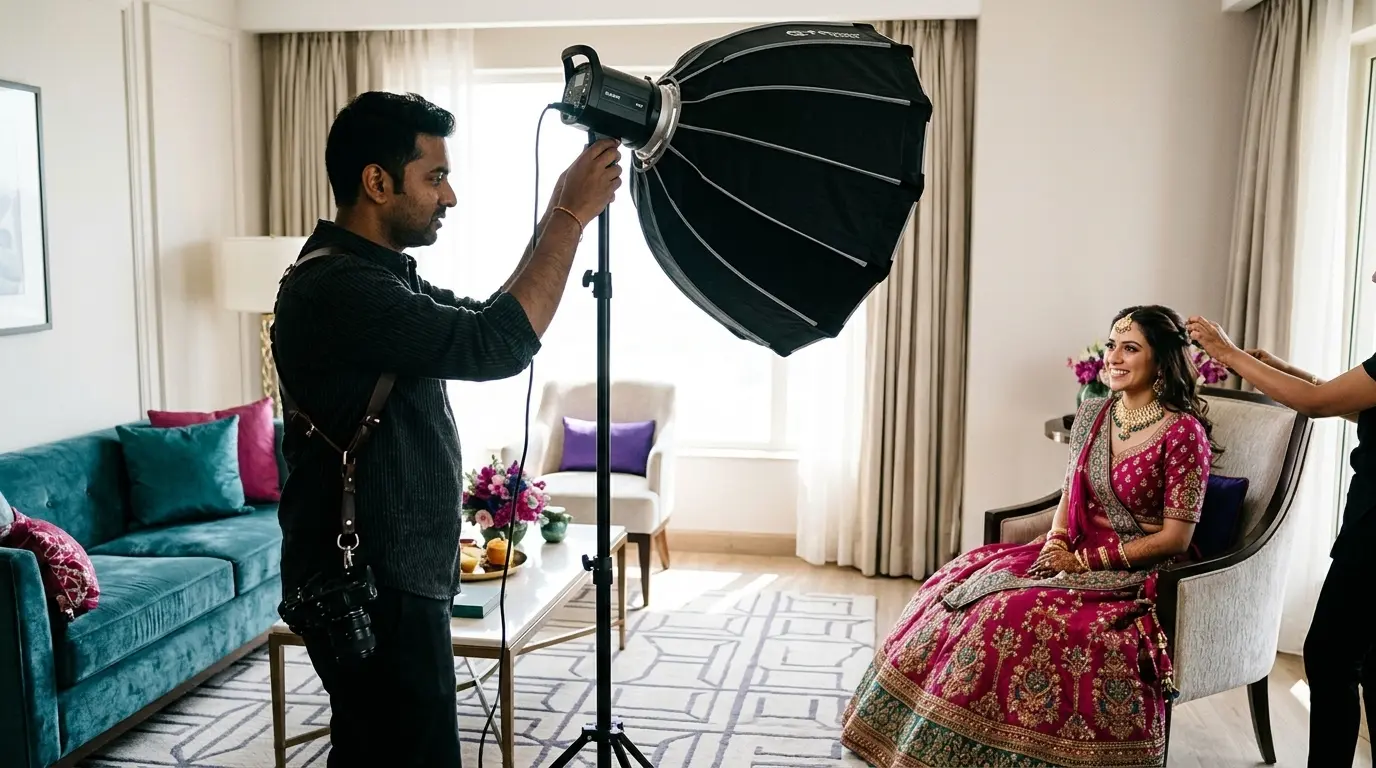
The undisputed answer to what is the best lighting for bridal portraits is large-window diffused daylight paired with an off-camera strobe or continuous light modified through an 80cm to 120cm octabox placed at a 45-degree angle. This hybrid setup flatters skin tone while maintaining clarity across intricate gold embroidery, heavy zardozi borders, and delicate jewellery.
Diffused directional light carves subtle cheekbone definition and softens pores without creating unflattering hot spots on foundation makeup. By balancing soft natural daylight with controlled off-camera fill, photographers prevent dark eye sockets and maintain true fabric colours across pastel or deep crimson lehengas.
Key takeaways:
- Diffused natural window light prevents greasy glare on heavy HD and airbrush bridal base makeup.
- An off-camera strobe or continuous fill light with a CRI 95+ rating preserves authentic lehenga embroidery tones.
- Direct yellow ceiling downlights and overhead banquet fixtures must be powered down before shooting.
- Golden hour outdoor timing produces warm, flattering skin tones without harsh facial shadows or squinting.
Natural vs Artificial Light: Setting the Standard for Delhi NCR Weddings
Bridal preparation suites in popular Delhi NCR banquet hubs like Chattarpur, Kapashera, and heritage properties near Humayun Tomb present serious colour balance challenges. Most hotel rooms feature mixed ambient bulbs, including harsh 2700K warm tungsten downlights and greenish fluorescent mirror strips that distort makeup palettes. Relying solely on ambient ceiling fixtures results in discoloured skin tones and muddy fabric textures.
Professional candid photographers solve this ambient mess by prioritizing clean, directional light. When scheduling daytime bridal vanity portraits, booking a trusted bridal photographer near me ensures an experienced technician who will immediately evaluate room orientation, shut off mismatched ceiling bulbs, and build a dedicated key light source.
Window Light and Golden Hour for Pre-Ceremony Sessions
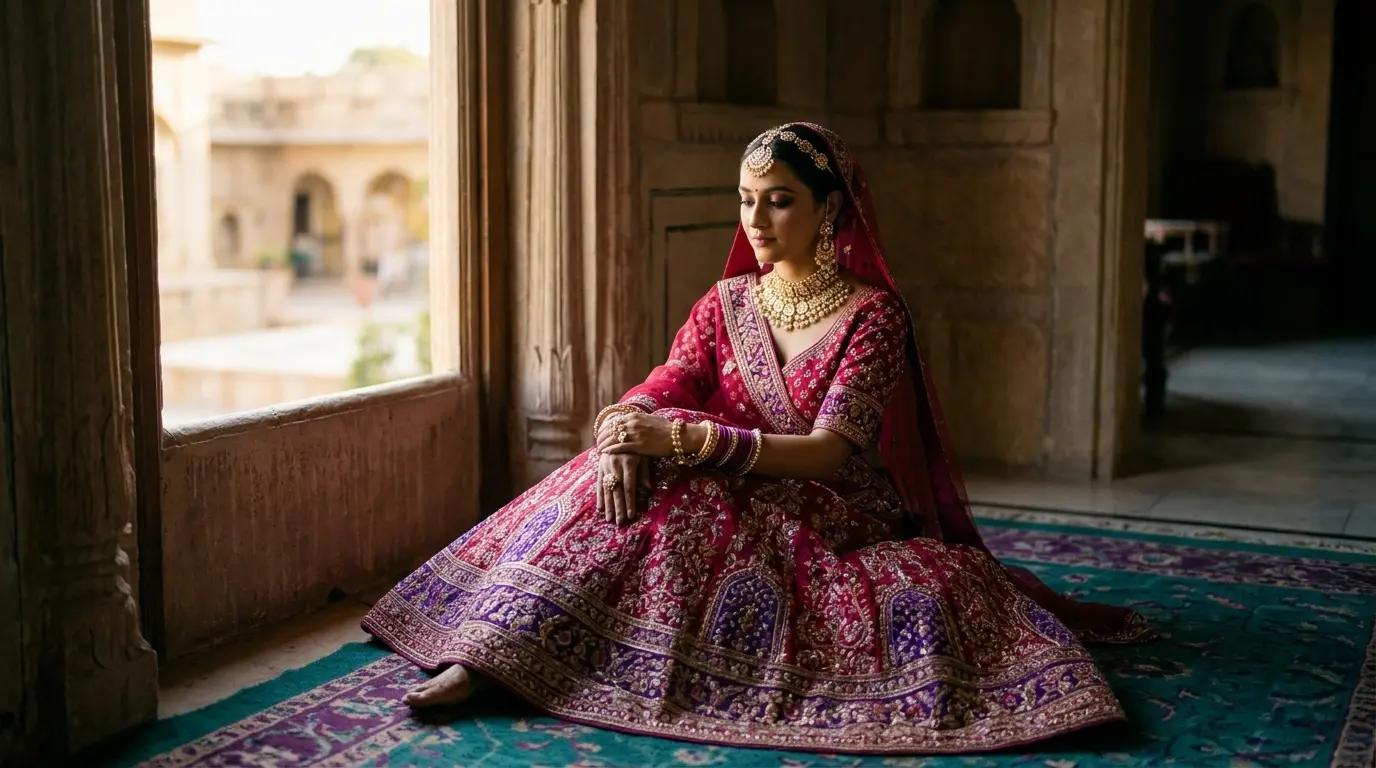
Large north- or east-facing windows provide the softest natural daylight between 3:00 PM and 5:00 PM across Delhi NCR. Diffused daylight wraps smoothly around the bride, revealing delicate zari threading and the sheer weave of bridal dupattas without harsh contrast. If direct sunlight beams through the glass, pulling sheer white voiles instantly diffuses the beam into an expansive, flattering softbox.
For outdoor pre-ceremony portraits, the golden hour—the final 45 to 60 minutes before sunset—remains the gold standard. The low sun angle eliminates unflattering nose and brow shadows while providing an authentic warm backlight across the lehenga veil.
Key Lighting Equipment Verified Photographers Use for Indian Bridal Shoots
Enclosed banquet rooms require deliberate artificial light modifiers to render dark jewel tones, velvet fabrics, and uncut polki diamonds cleanly. Verified wedding photographers rely on battery-operated, high-speed sync TTL monolights, such as the Godox AD200 Pro or AD400 Pro, mounted inside deep parabolic octaboxes. These modifiers deliver a broad, wrap-around beam that softens skin blemishes while sculpting the face.
For continuous video coverage and rapid candid captures during jewellery adjustment, teams deploy bi-colour LED light panels or tubes boasting a Color Rendering Index (CRI) of 96 or higher. Setting these continuous fixtures to 5600K daylight balance isolates the bride from murky room colours, guaranteeing consistent red, rani pink, and maroon fidelity from raw camera capture through final album printing.
Bridal Portrait Lighting Setups Compared: Scenarios, Gear & Results
Choosing the correct lighting formula depends entirely on venue constraints, ambient fixture quality, and the timeline allocated for bridal portraits.
| Lighting Setup | Best Suited For | Equipment Required | Practical Limitation |
|---|---|---|---|
| Diffused Window Daylight | Daytime bridal vanity portraits & getting-ready shots | Large unobstructed window, 2-in-1 collapsible reflector | Vulnerable to rapid shifts in outdoor cloud cover and sunset |
| Off-Camera Flash + Large Octabox | Enclosed Delhi banquet suites & evening indoor coverage | 200W-400W battery monolight, 90cm octabox, wireless trigger | Demands 6 to 8 feet of working floor clearance in hotel rooms |
| Golden Hour Direct Sunlight | Outdoor garden sessions at venues like The Forest Destination | Natural sun at 15° horizon angle, 42-inch white bounce board | Narrow shooting window restricted to 30-45 minutes before dusk |
| Dual Continuous LED Panels | Simultaneous cinematic video & quick candid vanity portraits | Bi-colour high-CRI (96+) LED panels or handheld tubes | Significantly lower lumen output than flash units in bright spaces |
Combining a diffused primary key source with a subtle white bounce reflector guarantees smooth, predictable skin tones across every complex skin tone. This balanced approach protects delicate fabric embroidery highlights while keeping shadow details open across intricate kundan neckpieces.
How to Set Up Flawless Lighting for Bridal Portraits: A Step-by-Step Guide
Executing a clean bridal portrait setup inside a busy preparation room requires a repeatable, systematic process. Follow these five sequential steps to achieve consistent results within ten minutes:
- Turn off overhead room fixtures: Cut power to all warm ceiling spotlights and yellow bedside lamps to eliminate conflicting colour temperatures on bridal foundation and fine jewellery (1 minute).
- Position the subject relative to the primary light: Seat the bride at a 45-degree angle to the light source so subtle shadows carve out cheekbones and create depth (2 minutes).
- Diffuse the key light source: Mount an 80cm or 90cm double-diffused octabox on an off-camera stand or position the bride near sheer curtains to eliminate hard shadows under the nose and chin (2 minutes). Booking verified wedding photographers through Cosmic Wedding ensures your team arrives with professional modifier kits rather than bare, unflattering flash units.
- Balance the shadow side with a reflector: Position a 42-inch white bounce disc on the opposite side to open up shadow details across heavy necklaces, earrings, and the maang tikka (2 minutes).
- Audit camera exposure against skin highlights: Review the in-camera histogram to ensure forehead and cheek highlights do not clip, preserving intricate gold and zari threading details (1 minute).
Common Bridal Portrait Lighting Mistakes to Avoid in Hotel Suites
Rushing through bridal getting-ready portraits often leads to preventable lighting errors that degrade portrait quality:
- Relying on on-camera direct flash: Pointing a bare speedlight directly at the bride produces harsh glare on foundation makeup, erases the depth of intricate embroidery, and creates an ugly silhouette shadow against nearby walls.
- Ignoring ambient light temperature conflicts: Blending warm 2700K bedside sconces with 5600K daylight-balanced flash produces muddy orange-and-cyan skin patches that calibration tools cannot salvage in post-production.
- Neglecting heavy jewellery reflection: Blasting uncovered point-source LED lights directly into faceted polki or kundan stones produces blinding white hotspots that obliterate gemstone definition; see Cambridge in Colour's breakdown on light diffusion and source size to understand specular glare reduction.
- Rushing the outdoor session past dusk: Delaying garden portraits until after sunset turns lush green lawns into pitch-black voids while forcing cameras into high ISO noise ranges.
- Forgetting venue space constraints: Bringing massive 150cm studio umbrellas into narrow hotel dressing rooms cramps the space and restricts flattering composition angles.
Selecting the Right Lighting Setup for Your Delhi NCR Wedding Day
Answering what is the best lighting for bridal portraits ultimately comes down to balance: directional, diffused light that honours natural skin texture while respecting the rich details of bridal couture. Professional gear is essential, but vendor proficiency in managing dark banquets and tight schedules across Delhi NCR makes all the difference. Explore transparent package tiers, review full unedited galleries, and browse verified wedding photographers in Delhi on Cosmic Wedding to secure the right team for your celebration.