
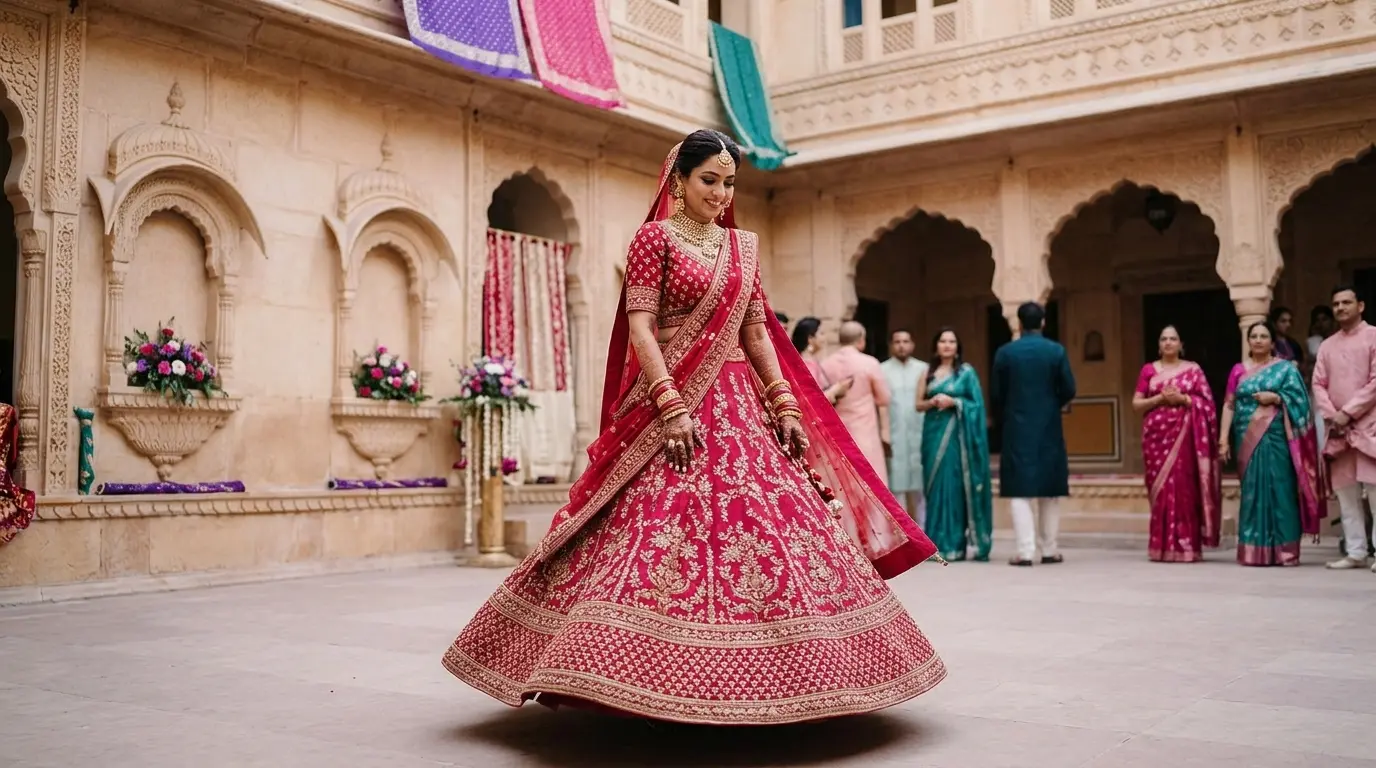
How to Pose Naturally in Heavy Bridal Lehenga
A bridal lehenga can easily weigh over fifteen kilos, turning simple movements into a physical challenge right when all cameras are on you. Knowing how to pose naturally in heavy bridal lehenga outfits comes down to smart weight distribution, deliberate posture, and working with your fabric instead of fighting it. Rather than forcing stiff, traditional poses that leave you exhausted, this practical guide breaks down reliable positioning techniques and micro-adjustments for effortless, candid-looking wedding photos.
How to Pose Naturally in Heavy Bridal Lehenga Without Feeling Stiff
To pose naturally in a heavy bridal lehenga, anchor your weight firmly onto your back foot, keep your spine lengthened, and position your elbows two to three inches away from your torso. This prevents dense zardozi embroidery from bunching, relieves lower-back compression, and allows the flared silhouette to drape cleanly without pulling your shoulders forward.
Bridal couture in Delhi NCR routinely ranges from 8 kg to over 15 kg once cancan underskirts, velvet borders, and double dupattas are secured. Managing that bulk requires intentional physics rather than rigid, static standing.
- Weight distribution: Shift 70% of your body weight to your rear leg to allow the front hip to angle subtly toward the lens.
- Arm clearance: Maintain negative space between your upper arms and waistline to define your natural frame.
- Rhythmic breathing: Exhale gently through an parted mouth before each click to soften your neck and collarbone line.
- Fabric flow: Move into poses through micro-turns rather than holding fixed angles, allowing the skirt's pleats to fall naturally.
Managing Lehenga Weight: Why Heavy Bridal Wear Causes Stiff Poses
Bridal couture creates immediate physical resistance that directly affects your on-camera body language. When a bride carries heavy velvet or dense raw silk alongside a weighted head dupatta, the physical instinct is to brace against the pull.
This natural bracing causes brides to lock their knees and hike their shoulders upward. Over a four-hour banquet shoot or lawn reception, that tension translates into pinched facial expressions and flat, awkward angles.
The Center of Gravity Shift: Handling 10+ Kg Skirts and Double Dupattas
An outfit weighing 10 to 15 kg fundamentally shifts your center of gravity backward and downward. Stiff cancan rings keep the skirt flared, but they resist standard walking mechanics and pull against your waist ties.
Double dupatta styling compounds this load by adding direct downward drag on your hairpins and cervical spine. Without conscious alignment, your head tilts slightly back and your shoulders round forward to compensate.
How Do You Look Relaxed While Wearing Heavy Outfits?
You look relaxed by making continuous micro-movements instead of freezing into rigid stances. Keep your jaw unclenched, leave a slight bend in your joints, and pivot your weight slowly from heel to toe between shutter releases.
Relying on clear direction during candid coverage ensures you never stay stranded in an awkward pose. When selecting an expert through a verified bridal photographer near me search, confirm they understand how to direct brides wearing elaborate ceremonial silhouettes.
A skilled team will prompt brief pacing steps or subtle head turns rather than forcing you to hold static positions that magnify physical exhaustion.
Posing Techniques for Heavy Lehengas: Static vs. Motion Poses
Understanding how static setups compare to motion-driven posing helps you balance physical endurance with natural visual variety during your wedding shoot.
| Posing Technique | Physical Stress / Weight Burden | Photographer Instruction Needed | Visual Naturalness |
|---|---|---|---|
| The Direct Symmetrical Front Stance | High; distributes 100% of weight directly downward onto hips and lower spine. | Minimal; requires basic square-on camera alignment. | Low; often appears stiff, boxy, and accentuates embroidery bulk. |
| The Slow Diagonal Walk (Cancan Kick) | Moderate; transfers weight dynamically between legs while moving forward. | Continuous; calls for gentle pacing cues and side framing. | Very High; creates natural skirt ripple, relaxed posture, and candid movement. |
| The Seated Royal Portrait (Chaise/Divan) | Low; fully removes garment weight from the lower back and knees. | Moderate; requires manual arrangement of the flared skirt and veil trail. | High; looks composed, regal, and elegant without physical strain. |
| The Waist Pivot & Look-Back | Moderate; creates gentle rotational stretch through the torso. | Specific; guides the head turn while keeping shoulder height level. | High; highlights blouse back embroidery, waist tailoring, and profile lines. |
| The Gentle Veil/Dupatta Hold | Low; arms are raised slightly, transferring wrist pressure outward. | Light; reminds bride to keep elbows soft rather than locked. | Moderate to High; frames facial jewelry while keeping hands naturally occupied. |
Alternating dynamic walking shots with supported seated portraits prevents back fatigue and keeps your expressions fresh throughout demanding portrait sessions.
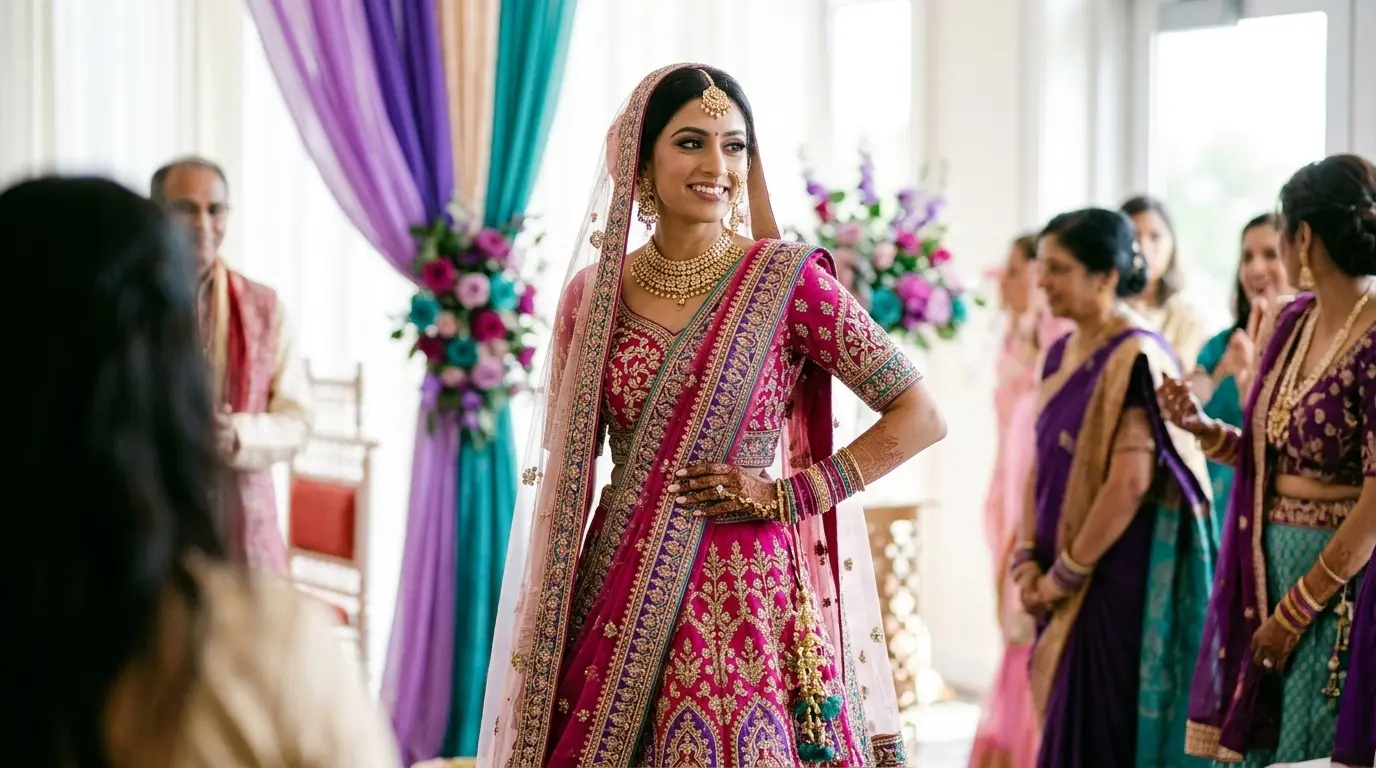
How to Pose Naturally in Heavy Bridal Lehenga: Step-by-Step Posture Guide
Executing clean bridal portraits in heavyweight ensembles requires structured body mechanics that counteract garment drag. Follow these operational steps during your portrait session to maintain effortless posture:
- Ground your base: Stand with your feet hip-width apart and keep your knees unlocked beneath the stiff cancan mesh. Locking your knees cuts off healthy circulation and forces your pelvis forward, producing a hollow, arched back.
- Create elbow clearance: Hold your hands two to three inches away from your hips rather than pressing your arms flat against your sides. This creates clean negative space around your waist, slims your upper silhouette, and prevents your sleeve embroidery from snagging on your waist embellishments.
- Initiate the toe-kick walk: When moving for motion shots, gently nudge the internal cancan netting forward with the tip of your shoe before rolling onto your foot. This subtle technique prevents your heels from catching on heavy borders and eliminates worried downward glances.
- Support your neck alignment: Lengthen your cervical spine upward from the crown of your head to balance the pull of a heavy velvet veil. Grounding your shoulder blades down and back counters the weight of head jewelry and pinned dupattas.
- Breathe through your mouth: Release a soft exhale through parted lips right before the camera shutter activates. This micro-action immediately resets clenching in your jaw, drops tight trapezius muscles, and prevents a frozen facial expression.
- Rely on professional posing cues: Partner with specialists who choreograph fluid micro-turns instead of rigid counts. Finding experienced candid portrait artists through Cosmic Wedding ensures your creative team knows how to pace shoots around couture weight.
Critical Posing Mistakes Brides Make with Heavy Lehengas
Even premium couture can look awkward on camera if physical adjustments are overlooked during fast-paced wedding schedules. Avoid these common posing pitfalls during your ceremonies:
- Clamping upper arms to the torso: Pressing your arms tight against your ribcage flattens the upper arms against the camera lens and crushes delicate zardozi border work.
- Locking knees during stage ceremonies: Standing rigidly during lengthy varmala or stage greetings leads to rapid lower-back strain and postural slump. Biomechanical research compiled by the Chartered Institute of Ergonomics and Human Factors demonstrates that prolonged static standing under axial loads significantly accelerates muscular fatigue.
- Pinning the secondary dupatta too tight: Securing the cross-body drape without sufficient slack restricts your ribcage and prevents natural upper-body turns. Ensure your stylist leaves enough ease for full shoulder movement.
- Staring down at your skirt hem: Glancing at your feet to monitor lehenga clearance ruins candid portrait angles. Trust the toe-kick movement to clear the fabric so your chin stays elevated toward ambient light.
- Skipping footwear rehearsal with full cancan: Walking in 12-kilo skirts requires familiar footwear elevation. Always test your planned wedding heels with your finalized bridal petticoat prior to the shoot date.
Securing Candid Wedding Photography for Your Big Day
Natural bridal portraits depend equally on personal posture control and an intuitive photographer who understands garment physics. Mastering how to pose naturally in heavy bridal lehenga outfits ensures you remain comfortable, confident, and radiant in every frame.
Review complete event galleries rather than curated social media snippets to verify how well a photography team captures candid, effortless movement across multi-hour ceremonies.
To connect with verified professionals who provide transparent package pricing and seasoned bridal direction, explore verified wedding vendors on Cosmic Wedding for your celebration.