
Cinematic Wedding Video vs Traditional Videography Guide
When planning your big day, choosing how to capture your favourite memories is just as vital as finalising the venue. Navigating the choice between a cinematic wedding video vs traditional videography often comes down to deciding whether you prefer a short, movie-style highlight film or a complete, chronological record of your rituals. Both styles offer distinct advantages, from visual storytelling techniques to overall production budgets. Here is a clear, practical guide to help you compare both options so you can book the right team for your celebrations.
When planning your big day, choosing how to capture your favourite memories is just as vital as finalising the venue. Navigating the choice between a cinematic wedding video vs traditional videography often comes down to deciding whether you prefer a short, movie-style highlight film or a complete, chronological record of your rituals. Both styles offer distinct advantages, from visual storytelling techniques to overall production budgets. Here is a clear, practical guide to help you compare both options so you can book the right team for your celebrations.
A cinematic wedding video is an emotional, stylized highlight film edited like a movie with licensed music and creative storytelling, whereas traditional videography is a continuous, chronological documentary capturing rituals and stage greetings in full length.
Planning a wedding can feel a little overwhelming, right? With so many options, it is easy to get confused. Multi-day Indian celebrations involve early morning Haldi rituals, high-energy Sangeet nights, sacred Pheras, and large family receptions. Deciding how to preserve these moments requires balancing personal visual taste with elder family expectations. Let us understand this step by step so you can make an informed choice with complete peace of mind.
Understanding the Two Filming Styles
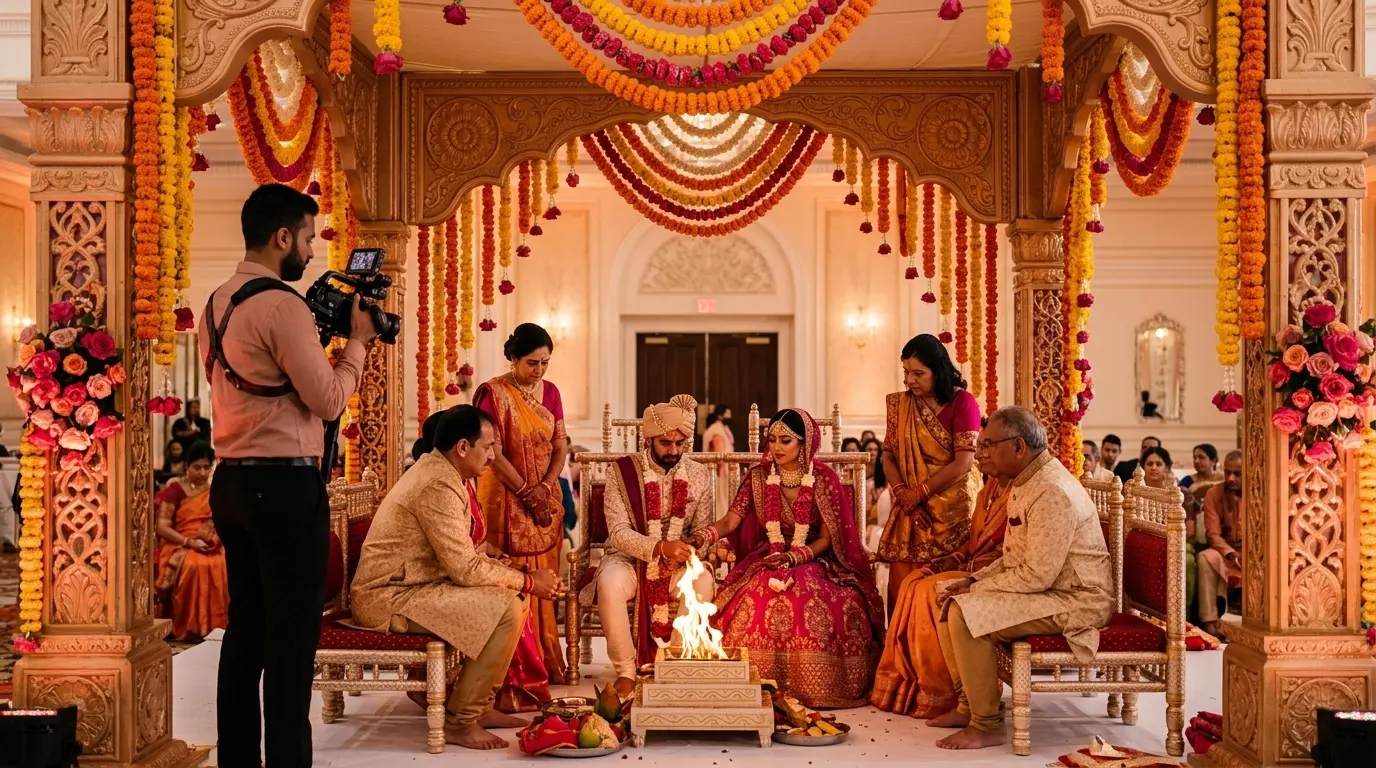
Traditional videography has been a trusted staple of Indian weddings for decades. The videographer stands with a shoulder-mounted camera and a bright LED light panel. Their primary job is complete coverage. They record every aunt offering sweets, every ritual mantra chanted during the Pheras, and every guest greeting the couple on stage. It produces a comprehensive archival record that elders love to revisit year after year.
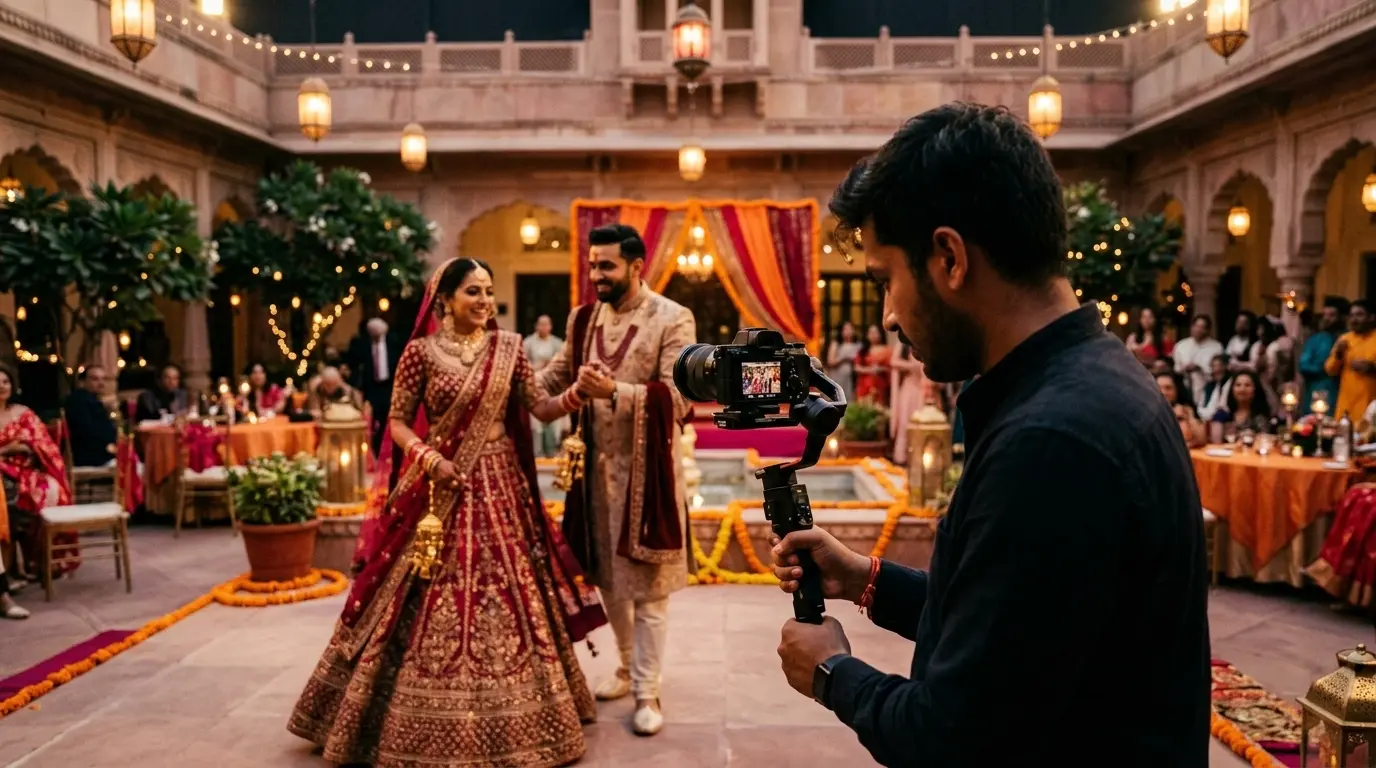
Cinematic wedding films take an artistic storytelling approach. A cinematic team treats your wedding celebrations like a romantic feature film. They use shallow depth of field, drone aerials, gimbal movements, and deliberate composition. Instead of filming continuously for two hours straight, they focus on candid emotions, shared laughter, intricate bridal details, and unscripted tears. Dialogue snippets from personal vows or emotional parent speeches are layered over musical scores to create a compelling narrative.
Key Differences: How Cinematic and Traditional Videography Handle Your Celebrations
Choosing between these formats affects your daily schedule, budget, and final viewing experience. Here is what you should know:
- Storytelling vs Continuous Coverage: Cinematic films focus on genuine atmosphere, curated music, and pivotal moments. Traditional coverage meticulously logs every guest arrival, ritual phase, and formal stage blessing without cutting away.
- Equipment and Crew Footprint: Cinematic teams use cinema cameras, prime portrait lenses, gimbals, and aerial drones. Traditional videographers work with broadcast-style camcorders, heavy tripods, and continuous mounted LED lights.
- Final Deliverables and Runtime: Cinematic videography typically yields a 3 to 5-minute social teaser along with a 15 to 20-minute feature highlight. Traditional videography delivers an unhurried, multi-hour chronological documentary covering complete ceremonies.
- Suitability for Multi-Day Functions: Energetic events like Mehendi, cocktail hours, and Sangeet dances shine in cinematic reels. Sacred rituals like the Nikah or Sindoor Daan, along with extended stage greetings, benefit from continuous traditional recording.
- Production Budgets: In Delhi NCR, traditional videography ranges from ₹40,000 to ₹1,00,000 per event day. Dedicated cinematic production packages generally start from ₹1,50,000 and can exceed ₹4,00,000 per day depending on crew size.
For a deeper dive into regional cinematography pricing and planning, check out the comprehensive pillar guide on cinematic wedding photography. Understanding these distinctions helps ensure your chosen coverage aligns with family priorities.
Direct Comparison: Cinematic Wedding Video vs Traditional Videography
Most modern couples in Delhi NCR now opt for a hybrid package to satisfy both personal taste and family requests. Reviewing the direct technical and financial parameters makes vendor discussions straightforward.
| Feature Parameter | Cinematic Wedding Video | Traditional Videography |
|---|---|---|
| Core Filming Focus | Emotional storytelling, candid expressions, artistic visuals | Continuous, chronological record of rituals and guests |
| Editing Style & Sound | Creative colour grading, licensed music, speech voiceovers | Linear sequential cuts with ambient live ceremony audio |
| Deliverables | 3–5 min teaser plus a 15–20 min cinematic highlight film | 2–3 hour full-length documentary cut across multiple USBs |
| Equipment Utilised | Full-frame cinema rigs, prime lenses, gimbals, 4K drones | Broadcast HD camcorders, tripods, mounted LED light panels |
| Standard Delivery Timeline | 6 to 12 weeks for comprehensive grading and mastering | 3 to 6 weeks for standard sequential edits |
| Estimated Daily Budget | ₹1,50,000 to ₹4,00,000+ per day | ₹40,000 to ₹1,00,000 per day |
Combining both styles within a unified package ensures you capture breathtaking visuals without omitting important rituals requested by family elders. This hybrid balance guarantees lasting satisfaction for everyone involved.
Why Many Couples Choose a Hybrid Videography Package
Wedding celebrations are a once-in-a-lifetime milestone where multiple generations share the same space. Your parents and grandparents will likely want to watch the entire two-hour recording of the ceremony, identifying extended relatives and observing every traditional Vedic or cultural custom. Meanwhile, you and your partner will probably prefer rewatching a fast-paced, emotive 15-minute film set to moving background music, accompanied by a 60-second reel for social sharing.
According to technical specifications published by the British Professional Photographers Guild, balancing high-speed narrative filming with archival multi-camera recording requires distinct camera placements and separate audio pipelines. Booking a vendor team that includes both a dedicated traditional camera operator and two cinematic shooters solves this challenge entirely. The traditional camera remains fixed on a tripod covering stage blessings and continuous mantras, freeing the cinematic team to move discreetly around the venue capturing genuine micro-moments and artistic cutaways.
Plan Your Wedding Films with Confidence
Long after the floral decor is dismantled and the wedding feast concludes, your photographs and wedding films remain the only physical keepsakes of your celebration. If your budget permits, hiring verified specialists who offer both cinematic artistry and reliable documentary coverage provides immense peace of mind.
Through Cosmic Wedding, couples across Delhi NCR can easily discover verified wedding photographers in Delhi, compare detailed portfolios, and review transparent pricing across various budget tiers without paying agency booking commissions. In addition, professional wedding videographers and photography studios can join our network to connect directly with budget-specific client leads seeking exceptional talent.